

Trezor Safe 3
For a first hardware wallet on a tight budget.
- EAL6+ secure element
- Small monochrome screen, two buttons
- USB-C connection
- Open-source firmware
€59at Trezor’s shop
Order the Safe 3 (opens in a new tab)Guide · cold storage
A cold wallet keeps the key to your crypto offline, beyond the reach of hackers, malware and a failing exchange. Here is how cold storage works and which cold wallet to buy.
Trezor cold wallets from €59
By the PlatformCrypto.eu editorial team · checked on
What is a cold wallet?
A cold wallet is any wallet whose private key never sits on an internet-connected device. In practice that usually means a hardware wallet such as a Trezor, which signs transactions without revealing the key. Its opposite is a hot wallet: an app, browser extension or exchange account that is always online.
Hot vs cold
A hot wallet lives on a device that also browses, emails and installs apps. Fine for small amounts you spend often, but one infected download or fake site can be enough to drain it.
A cold wallet keeps those worlds apart. The key sits in a device that only signs. Even if your computer is thoroughly compromised, nothing moves until you approve it on the device.
Comparison
Three ways to hold crypto, side by side.
| Topic | On an exchange | Hot wallet (app) | 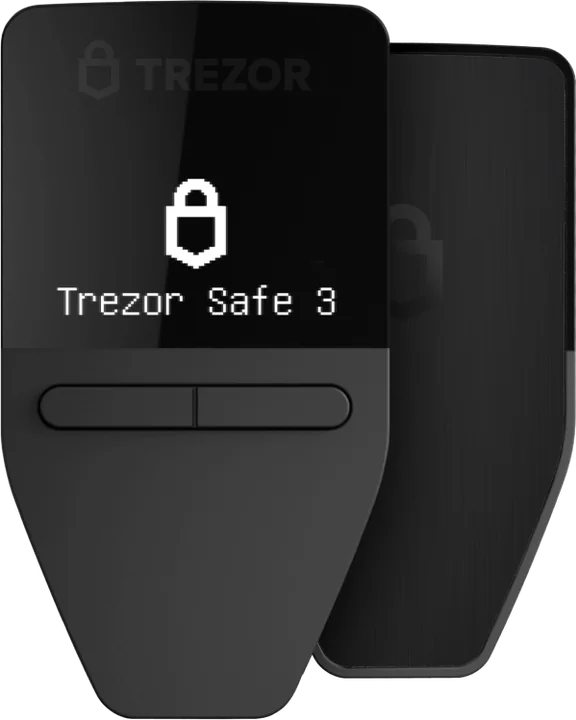 SafestCold wallet |
|---|---|---|---|
| Who holds the key? | Drawback: The exchange | You, on an online device | Advantage: You, offline |
| If the exchange fails | Drawback: Depends on the wind-down | Advantage: No effect | Advantage: No effect |
| Malware on your computer | Drawback: Can take over your account | Drawback: Can steal your key | Advantage: Can do nothing without your approval |
| Convenience | Advantage: Sell instantly | Advantage: Quick, on your phone | One extra step per transaction |
| Cost | None | Free | One-off, from €59 |
MiCA requires licensed exchanges to keep client crypto separate from their own, which helps, but self-custody removes the exchange from the picture entirely. See the MiCA register.
Types
Several things count as cold storage, but a hardware wallet is the only one that also makes spending easy. A paper wallet (a printed key) is cold until you use it, at which point you have to type the key somewhere and it is no longer cold at all.
Steel is not a wallet but a backup: your recovery words, kept in metal that survives fire and water. The Trezor Keep Metal (opens in a new tab) keeps your backup as “cold” as your key.
Buy a cold wallet
Each keeps your key offline inside a certified chip. Need help choosing? Read best hardware wallet.
For a first hardware wallet on a tight budget.
€59at Trezor’s shop
Order the Safe 3 (opens in a new tab)For approving transactions with a tap on a colour screen.
€129at Trezor’s shop
Order the Safe 5 (opens in a new tab)For anyone who wants full Trezor Suite on an iPhone.
€249at Trezor’s shop
Order the Safe 7 (opens in a new tab)Euro prices in Trezor’s official shop, checked on 26 October 2026. Your basket shows the current total, including delivery.
Moving your coins
Install Trezor Suite, create your recovery phrase and pick a PIN. Write the words on paper or steel.
Choose the coin and Receive. Check the address on the Trezor’s screen, not just your computer’s.
Paste the address and select the same network. Some exchanges then ask for proof that you own the wallet.
Once it lands, send the rest. Note that EU exchanges report transfers to self-hosted wallets (DAC8).
Order a Trezor directly from the maker and take your coins off the exchange. Pick the model that suits you.
Trezor Safe 3
€59
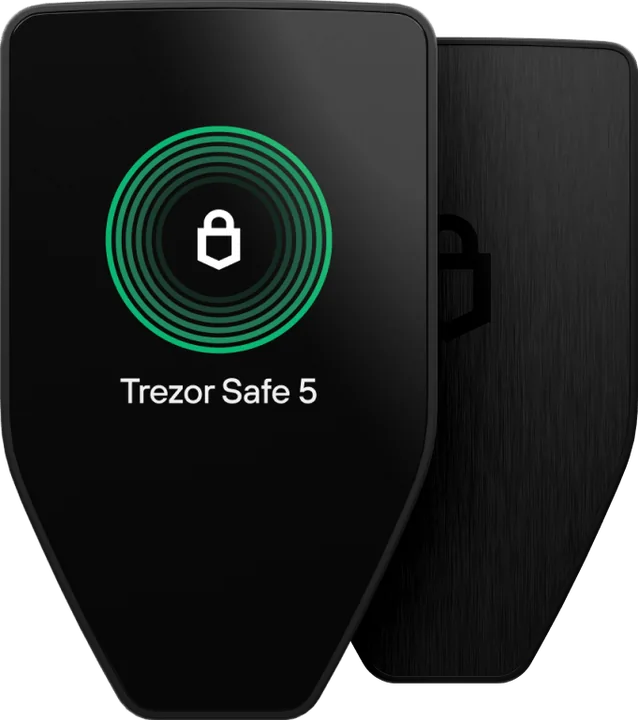
Trezor Safe 5
€129
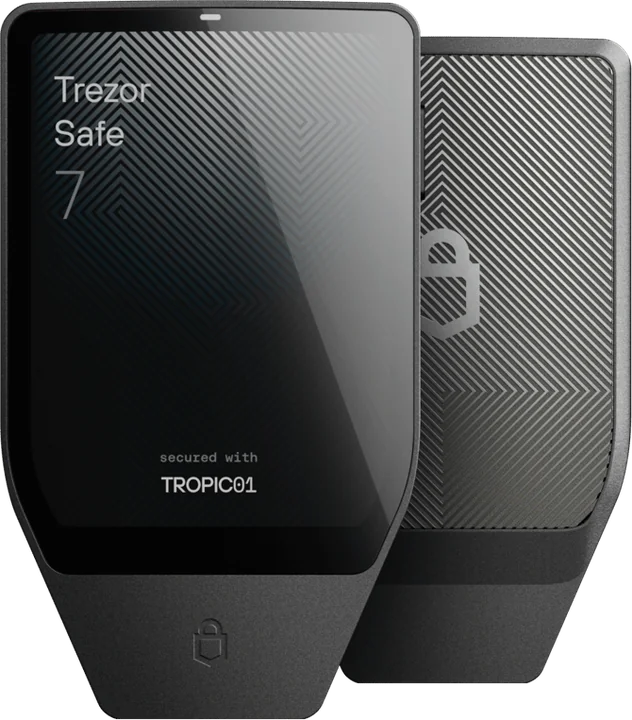
Trezor Safe 7
€249
A crypto wallet whose private key is kept offline, usually on a hardware wallet such as a Trezor. You sign transactions on the device, so the key never reaches an internet-connected computer or phone.
In a hot wallet (an app, browser extension or exchange account) the key lives on an online device. In a cold wallet it stays offline. Hot is handier for small sums; cold is safer for what you hold.
Ideally straight from the maker, such as Trezor’s or Ledger’s own shop, so you know the device is new and nobody has seen its recovery phrase.
Only if someone gets your recovery phrase, or if you yourself approve a payment to the wrong address. Keep the words offline and check every address on the device’s screen.
A Trezor costs €59, €129 or €249 depending on the model. After that you pay nothing more: Trezor Suite is free, and sending costs only the blockchain’s network fee.
Keep reading
How a hardware wallet protects your crypto, and what it costs.
Our pick for every need: beginner, iPhone or bitcoin only.
Where your bitcoin should live, from app to Bitcoin-only Trezor.
The cheapest Trezor with a secure element: specs and who it suits.
Open source against wider coin support: the two big brands compared.
Five well-known wallets side by side, hardware and software.